Three generations · free PDF
Family tree diagram
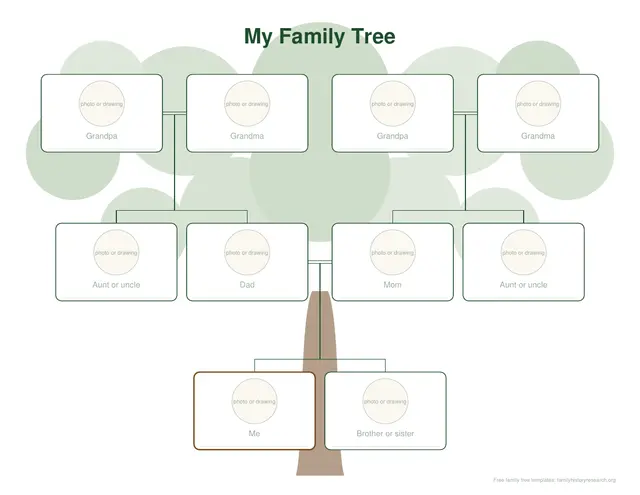
A family tree diagram draws the family as people connected by two kinds of line: one joining a couple, one dropping down from the couple to their children. With just those two lines you can show grandparents, parents, aunts, uncles, brothers and sisters on one page.
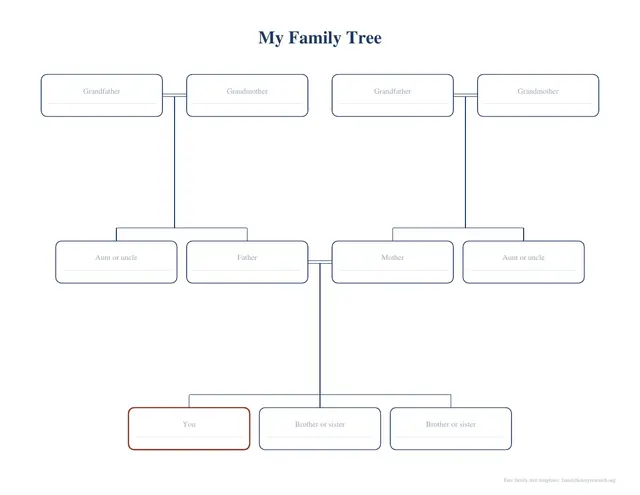
The empty boxes are where we start
Tell us about one person and the names you have, and we'll go after the generations behind them. We read the original records (census pages, draft cards, certificates, passenger lists) and write up who your people were, with every fact tied to the record it came from. One person, $49, by email within 7 days. If we can't find them in the records, you get your money back.
Start a report · $49Read a finished report
A gift that lands: order by December 12 and it reaches you before Christmas. It can be about someone who has died, or for someone living (we trace the family they came from).
The lines, and what they mean
- A double line between two people means, on this chart, that they married (or are a couple). The year of the marriage can sit above it.
- A line down from the middle of that double line branches out to their children, who stand side by side in birth order, oldest on the left.
- One box drawn differently marks the person the tree is about, so a reader knows where to start.
Each generation gets its own row, oldest at the top. Your parents' brothers and sisters stand beside them in their row, each under their own parents, which is why your father's family sits on one side of the page and your mother's on the other.
When the family isn't that simple
Real families have second marriages, half-brothers and sisters, adoptions and step-parents. A common way to draw it is to give each marriage its own line, with that couple's children dropping from it; many charts join an adopted child with a dashed line. On one page, keep the diagram readable: it's fine to note a second marriage in a box (“also m. 1961 Ruth Hale”) and draw that family on a separate sheet.
Other templates
Questions
What's a family tree diagram called?
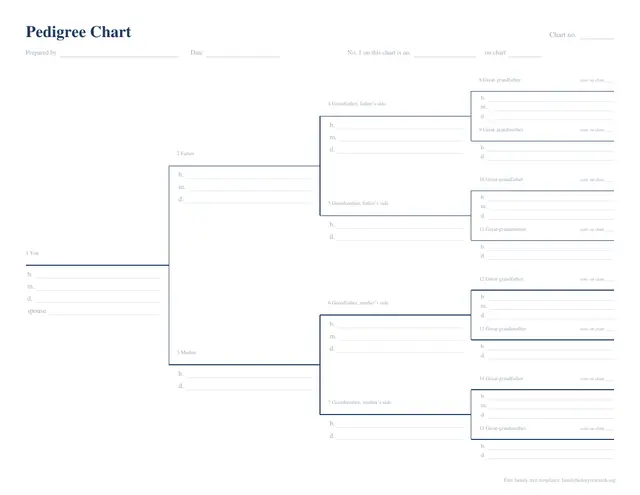
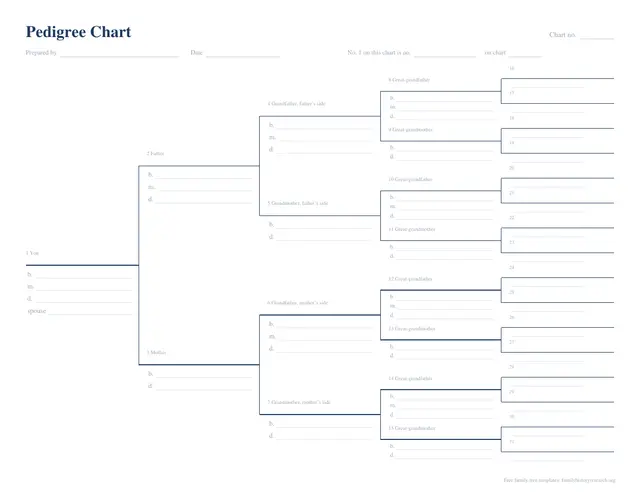
Genealogists call a diagram that starts from a couple and works down to their descendants a descendant chart, and one that starts from a person and works up a pedigree chart. The everyday family tree diagram, with brothers and sisters and aunts and uncles, is a bit of both.
Can I add cousins?
This diagram covers three generations: grandparents, parents with their brothers and sisters, and you with yours. Cousins would make a fourth row under each aunt and uncle; for a big family, make a second diagram with an aunt or uncle as the couple in the middle.
The example family in the maker is made up. The charts are drawn in your browser; we never see what you type.